Watch Boxes: Industry Guide to Storage, Display, Travel and Custom Packaging
Watch Boxes: Industry Guide to Storage, Display, Travel and Custom Packaging
A good watch deserves a box that does more than just hold it. Watch Boxes are structured storage and presentation products built to protect watches, keep collections organized, support visual display, and carry branded gift packaging where needed. For watch-related product programs, store presentation, corporate gifting, travel accessories, and collection storage, a well-developed watch box pulls protection, appearance, function, and brand identity together into one practical format.
What Are Watch Boxes?
Watch boxes are structured storage and packaging products used for placing, displaying, protecting, transporting, and presenting watches. From a factory manufacturing standpoint, this category covers both standard storage formats and fully customized packaging solutions — shaped by material choice, structural requirements, logo placement, and how the box will actually be used.

A watch box might be built for:
- Single watch presentation for gift packaging or product display
- Multi-watch storage for organized collections
- Display window presentation using acrylic or glass-style panels
- Travel carrying with compact size and protective interior
- Lockable storage for added privacy and a sense of security
- Custom packaging programs involving logo, color, lining, insert card, sleeve, and outer carton design
- Replacement storage for watches that need protective placement without a winding function
From the factory floor, a watch box is really several coordinated parts working together — lid and base structure, watch cushion, divider system, inner lining, transparent window, lock or closure, outer material, hardware, logo process, and protective packaging.
Watch Boxes Industry Trends and Common Requirements
The watch box market spans storage, presentation, gifting, travel, and coordinated product packaging. A handful of practical requirements tend to shape development no matter the project.
Organized Watch Storage
Watches need stable positioning to avoid shifting around inside the box. Individual cushions, compartments, dividers, and fitted supports all help create a more organized interior.
Multi-watch boxes typically rely on separate sections, so each watch gets its own dedicated storage position.
Display-Oriented Designs
A transparent window lets a watch stay visible without ever opening the box — useful in display environments while the structure stays fully enclosed.
Window placement, frame construction, lid structure, and internal support all need to work together as one coordinated system rather than separate decisions.
Travel and Portable Storage
Travel watch boxes are mostly about compact organization paired with secure positioning. Folding cases, lightweight structures, soft interiors, carrying handles, and secure closures all come into play depending on how the product will actually be used.
Protective Interior Structures
Watch surfaces and straps don't hold up well against friction, pressure, dust, or contact with other objects. Soft lining, cushioning, separated compartments, and fitted supports all help minimize that kind of unwanted contact during storage.
Refined Materials and Surface Finishes
The exterior material does a lot of the visual and tactile heavy lifting for a watch box. PU, leather-like materials, wood, fabric, metal hardware, and various combinations all point toward different visual directions.
Customized Product Presentation
Watch boxes become part of a coordinated presentation once color, material, logo treatment, internal layout, and packaging all start working together as one system.
Watch Boxes Product Categories
Watch boxes break down by capacity, structure, portability, display function, and intended use — each category tends to solve a fairly specific problem.
Single Watch Boxes
Single watch boxes are built around one watch and usually rely on a dedicated cushion or holder. Their compact size makes them a natural fit for individual presentation, gift packaging, and organized storage.
Typical configurations include:
- One watch cushion
- Hinged or lift-top lid
- Soft interior lining
- Magnetic or clasp closure
- Customized exterior covering
- Logo application
Multi Watch Boxes
Multi watch boxes give each watch its own storage position within a single enclosure. Internal dividers and individual cushions create a genuinely organized arrangement rather than just more space.
How many compartments and how they're laid out usually comes down to the intended watch combination and overall box structure.
Travel Watch Cases
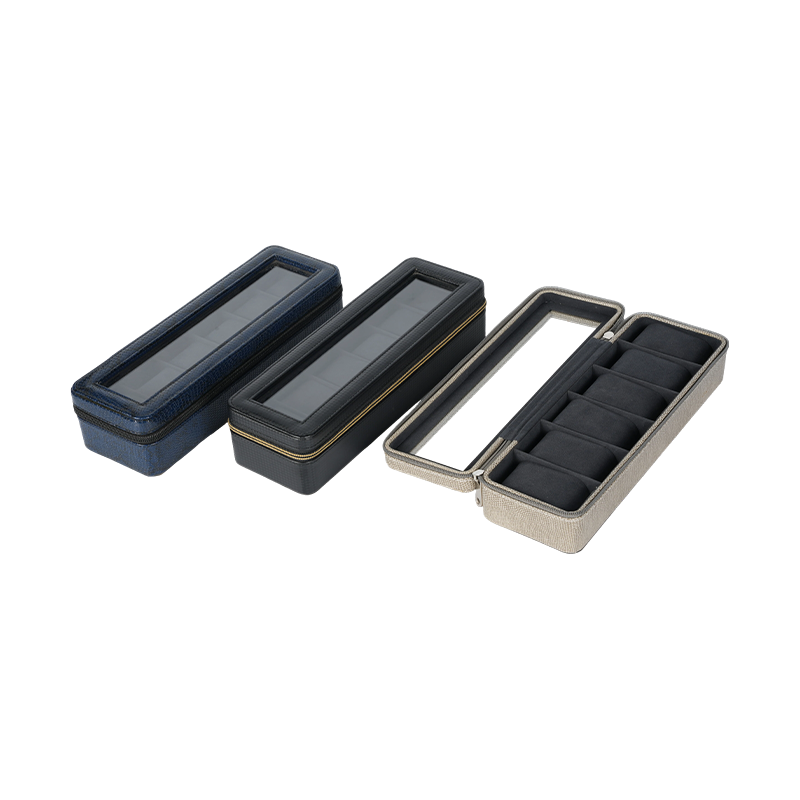
Travel watch boxes are built for portability first. That often means compact folding sections, padded interiors, individual watch holders, secure closures, and carrying features working together.
The trick is balancing portability with enough internal organization and protection to actually be useful on the road.
Watch Display Boxes
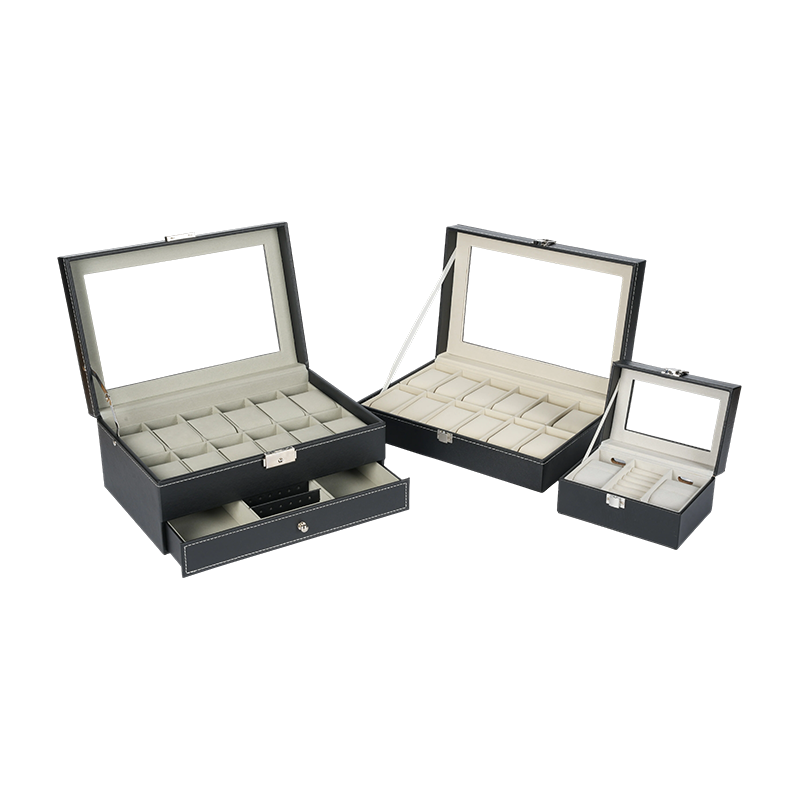
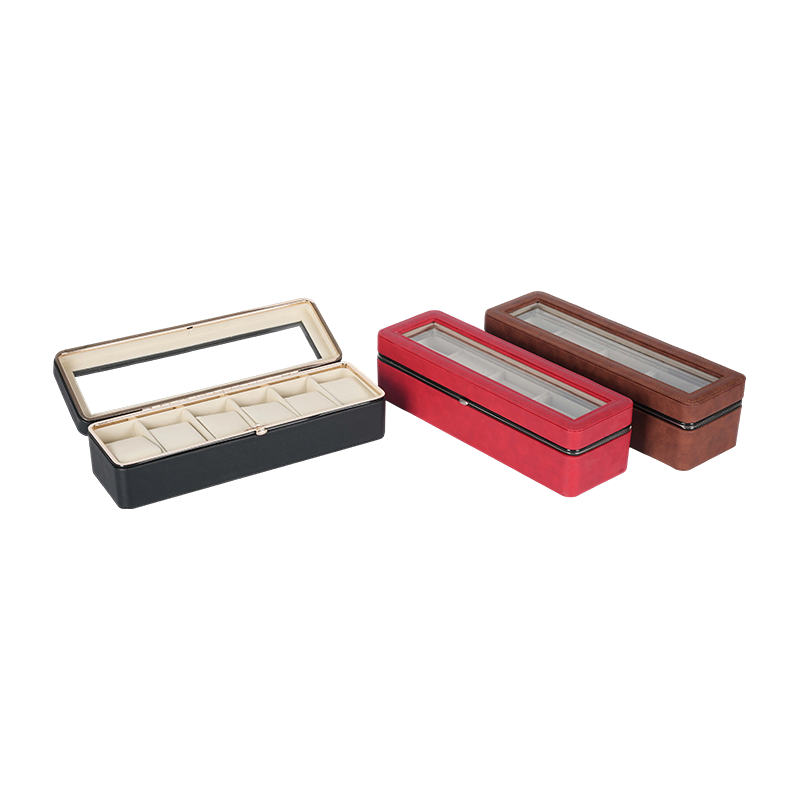
Watch display boxes combine storage with visual presentation. A transparent window or openable lid keeps the contents visible while each watch stays positioned in its own individual support.
These work well in display environments, presentation settings, and packaging concepts where visibility genuinely matters.
Lockable Watch Boxes
Lockable watch boxes add a lock, clasp, latch, or other fastening structure — an extra layer of enclosure and security during storage or transport.
Hardware choice needs to line up with the box material, lid construction, and how the box is meant to operate day to day.
Watch Gift Boxes
Watch gift boxes are built to combine product protection with genuine presentation value. Exterior coverings, interior cushions, color combinations, logo details, and packaging accessories all get coordinated into one complete presentation format.
Wooden Watch Boxes
Wooden watch boxes use a rigid outer structure that pairs well with soft interior materials, cushions, dividers, metal hardware, or transparent components.
This kind of material combination supports both storage-focused and display-focused applications equally well.
Watch Box Structure and Functional Components
How a watch box performs and looks really comes down to the interplay between outer structure, internal supports, closures, hardware, and presentation elements — not any single piece on its own.
Interior Lining
Soft materials like velvet, fabric, suede-like coverings, or PU-covered surfaces typically show up wherever the watch actually makes contact with the box.
The lining softens that interface between watch and structure, while also shaping the overall look and feel of the interior.
Watch Cushions and Padded Supports
Watch cushions hold each piece in a defined position. Depending on the design, they might be removable, fixed, shaped to match a specific watch style, or built directly into a compartment.
The support structure needs to match the intended watch configuration and whatever interior space is actually available.
Compartment and Divider Systems
Dividers keep individual storage positions separate and stop watches from drifting into neighboring sections.
A multi-watch box might use fixed dividers, removable sections, individual cushions, or layered internal structures — sometimes a mix of all four.
Protective and Shock-Reducing Structures
Padded interiors and cushioning materials absorb minor movement and keep the watch away from harder surfaces nearby.
This protective structure is usually developed around the box construction, how the watches sit inside, and the handling environment the box will actually face.
Dust Protection
A properly closed watch box cuts down on dust exposure significantly. Lid construction, closure system, and how tightly the lid meets the base all play into how enclosed the structure really is.
Hinged Lids
Hinged lids offer a familiar, intuitive opening method that works for both storage and display purposes. Hinge choice and placement need to be coordinated with the lid material and overall box construction.
Magnetic Closures
Magnetic closures give a convenient open-and-close experience for designs that don't need a traditional lock or clasp.
Where the magnets sit needs to line up precisely with the lid construction and closure alignment.
Locks, Clasps and Latches
Mechanical locks, clasps, and latches step in wherever a more secure closure matters. Different hardware styles also shift the visual character of the finished box quite a bit.
Transparent Display Windows
Acrylic or glass-style panels bring product visibility into selected watch boxes. Getting this right takes attention to several things at once:
- Window position
- Frame structure
- Panel stability
- Lid construction
- Internal watch positioning
- Surface protection during packing
Carrying Handles
Portable watch boxes sometimes pick up handles or other carrying features. Where the handle sits should reflect the box's actual weight distribution and overall structure.
Materials and Build Options for Watch Boxes
Material choice shapes appearance, structure, weight, tactile feel, and ultimately how the box gets used. Some projects lean on a single material; others mix several together.
| Material or Component |
Typical Characteristics |
Common Application Direction |
| PU / Leather-Like Covering |
Smooth, textured, and customizable surface appearance |
Gift presentation, storage, coordinated product packaging |
| Leather |
Refined tactile surface and natural material character |
Premium-style presentation and storage concepts |
| Velvet / Soft Fabric |
Soft contact surface and decorative interior appearance |
Watch cushions and interior lining |
| Wood |
Rigid structure with natural visual character |
Display and long-term storage |
| Metal Hardware |
Structural and decorative function |
Hinges, locks, clasps, handles, decorative details |
| Acrylic |
Lightweight transparent appearance |
Display windows and transparent panels |
| Glass |
Clear display surface |
Display-oriented box structures |
| Mixed Materials |
Combines structural and visual characteristics |
Customized Watch Boxes |
PU and Leather Watch Boxes
PU and leather-like coverings adapt easily across watch box projects. They pair naturally with soft interior linings, padded cushions, metal hardware, and custom surface details.
Genuine leather comes into play when a more natural material appearance is part of the concept from the start.
Velvet and Fabric Interiors
Velvet and fabric are the standard choice for watch cushions, compartment linings, and interior panels. The soft surface supports presentation while creating a nice visual contrast against the outer covering.
Wooden Structures
Wood gives watch boxes a rigid base that works for both display-oriented and storage-oriented designs. It pairs well with fabric, velvet, PU, metal hardware, and transparent panels.
Metal Hardware
Metal hardware handles hinges, clasps, locks, handles, corner details, and decorative elements. Style and surface treatment can be tuned to match the overall design direction.
Acrylic and Glass Display Components
Transparent acrylic or glass brings genuine visibility to display-oriented watch boxes. Which one makes sense depends on the required structure, handling environment, appearance goals, and packaging approach.
Mixed-Material Construction
Combining materials strikes a balance between rigidity, softness, visibility, appearance, and function all at once. A rigid outer box, for instance, might pair a PU covering with a velvet lining, padded watch cushions, metal hardware, and a transparent lid section — all in one product.
Customization and OEM/ODM Watch Boxes
Custom watch boxes work best when they're built around specific product requirements rather than adapted from a generic structure. Customization can touch the exterior, interior, functional components, branding, and packaging.
Custom Dimensions and Structure
Overall dimensions, lid construction, base structure, compartment arrangement, and internal supports all get developed around the intended watch configuration.
Internal Layout Customization
Internal layouts adapt to different watch quantities and combinations.
Possible configurations include:
- Single-watch cushion
- Multi-watch compartments
- Individual padded holders
- Fixed dividers
- Removable dividers
- Layered storage
- Customized insert layouts
- Additional accessory compartments
Color Customization
Exterior and interior colors get coordinated around the intended visual direction. Outer covering, lining, cushions, hardware, and packaging all function as one visual system rather than separate choices.
Material Customization
Different combinations of PU, leather, fabric, velvet, wood, acrylic, glass, and metal components get evaluated against the structure and intended application.
Logo and Branding Details
Common logo application methods include:
- Screen printing
- Foil stamping
- Embossing
- Debossing
- UV printing
- Labels or stickers
- Customized metal badges
- Printed packaging elements
Which method actually works depends on the surface material, structure, logo design, and production process — not every marking method suits every material.
Pattern and Texture Customization
Surface textures, grain patterns, printed graphics, decorative lines, and other visual elements can all be worked in wherever they're compatible with the chosen material and manufacturing method.
Packaging Customization
The packaging system develops alongside the watch box itself. Possible elements include:
- Inner protective materials
- Product sleeves
- Printed outer boxes
- Information cards
- Instruction cards
- Logo cards
- Protective wrapping
- Customized shipping cartons
Applications of Watch Boxes
Watch boxes support a wide range of presentation, storage, travel, and gifting scenarios.
Watch Storage
Multi-watch boxes create separated positions for organizing several pieces within one enclosed structure. Cushions and dividers help keep everything properly separated.
Gift Presentation
Watch gift boxes pair a dedicated watch holder with a presentation-focused exterior. Materials, colors, logo details, and internal lining all coordinate around the intended gift concept.
Display and Presentation
Display watch boxes with transparent windows keep watches visible while they stay protected inside a structured enclosure.
Travel
Travel watch cases prioritize portability and organized storage. Compact structures, padded interiors, secure closures, and carrying features all get considered based on the intended travel environment.
Brand Packaging
Custom watch boxes become part of a coordinated packaging system through consistent colors, materials, logo treatment, inserts, and printed components.
Seasonal and Corporate Gifting
Customized watch boxes work well for holiday gifting, commemorative activities, corporate gift programs, and other special presentation concepts.
Collection Storage
Larger watch boxes with multiple compartments provide organized storage for several watches while keeping a consistent interior arrangement throughout.
How to Select the Right Watch Boxes
The right watch box structure comes down to watch configuration, storage purpose, presentation needs, and the handling environment it'll actually face.
Consider the Number of Watches
Single-watch and multi-watch boxes need genuinely different internal structures. Nail down the number of storage positions before the interior layout gets developed.
Consider Watch Positioning
Cushions, holders, dividers, and compartments all need to keep each watch in a defined position, without unnecessary movement, matched to the intended watch style.
Consider Display Requirements
Where visibility matters, a transparent window or display lid makes sense — but it needs to be evaluated together with the lid, frame, internal support, and packaging, not on its own.
Consider Travel Requirements
Travel applications generally call for compact organization, secure closures, cushioning, and carrying features that are actually convenient to use.
Consider Material Direction
PU, leather, wood, velvet, fabric, acrylic, glass, and metal hardware each bring different structural and visual qualities. Match the material to the intended application and design concept.
Consider Closure Requirements
Magnetic closures, clasps, latches, and locks offer different operating experiences and levels of enclosure. Pick the mechanism that actually fits the box structure.
Consider Branding Requirements
Logo placement and marking technique deserve early attention — the available surface, material, and production method all shape what's actually possible.
Consider Packaging Requirements
External packaging needs to protect the finished box while preserving its presentation quality, accounting for the box structure, material sensitivity, handling, and transport environment.
Why Choose Bozhong Watch Boxes
Factory-Based Product Development
Bozhong brings product development, material selection, structural manufacturing, assembly, quality inspection, and packaging together within one factory-based workflow.
OEM and ODM Development Support
Custom watch boxes can be developed around different structures, materials, internal layouts, closure systems, logo treatments, colors, and packaging requirements.
Flexible Material Combinations
PU, leather, velvet, fabric, wood, acrylic, glass, and metal hardware can all be evaluated in different combinations depending on the intended product structure.
Internal Layout Development
Single-watch holders, multi-watch compartments, cushions, dividers, trays, and other internal components get designed around the actual watch configuration.
Integrated Assembly Capability
Exterior coverings, internal linings, cushions, dividers, hinges, closures, locks, magnets, handles, and decorative elements all get coordinated during assembly.
Quality Control
Inspection covers structural alignment, material appearance, functional components, interior positioning, logo details, hardware, and finished packaging.
Export Packaging Experience
Watch boxes need careful packing — they often combine rigid structures, surface coverings, transparent components, metal hardware, and delicate interior materials all in one product. Packaging arrangements get developed around the physical characteristics of the finished product to keep transportation safe.
Frequently Asked Questions About Watch Boxes
1. What is the difference between a single-watch box and a multi-watch box? A single-watch box centers around one dedicated position, while a multi-watch box uses several cushions or compartments within one enclosure. The internal construction shifts based on how much storage capacity is actually needed.
2. Are Watch Boxes suitable for watches with different strap types? Yes. Internal holders can be developed around different watch configurations — cushion shape, compartment width, fastening method, and internal spacing all get considered during development.
3. Can a Watch Box include an accessory compartment? Yes. Where interior space allows, an additional compartment can hold related accessories or small items, as long as it doesn't interfere with the watch holders themselves.
4. What should be considered when choosing a transparent window? Key considerations include window material, panel position, frame construction, lid structure, visibility, surface protection, and packaging method. Acrylic and glass each bring their own structural and handling trade-offs.
5. Can a Watch Box combine a transparent lid with a lock? Yes. A display-oriented structure can pair a transparent window with a clasp, latch, magnetic closure, or lock — as long as the components are actually compatible with the overall construction.
6. Which material is suitable for a lightweight Watch Box? Lightweight construction usually comes from the right combination of PU or leather-like coverings, fabric interiors, lightweight structural materials, and appropriately chosen hardware. The final combination depends on the required structure and application.
7. How can logo placement be incorporated into Watch Boxes? Logo placement can go on the lid, front panel, interior panel, metal badge, insert, or packaging component. The available marking technique depends on the selected material and surface structure.
8. Can the interior color differ from the exterior color? Yes. Exterior and interior colors can be developed separately or as a coordinated combination — contrasting colors can also help visually distinguish the outer structure from the watch presentation area.
9. What makes a Watch Box suitable for travel? A travel-oriented structure generally benefits from compact organization, secure closures, protective cushioning, separated watch positions, and convenient handling — the exact combination depends on the intended travel format.
10. Can Watch Boxes be developed in matching sizes and designs? Yes. A product range can share coordinated exterior materials, colors, logo treatments, hardware, and interior styling while still using different internal capacities or structures.
11. How are wooden Watch Boxes different from PU Watch Boxes? Wood generally brings a rigid outer structure and natural visual character, while PU offers more flexibility in surface appearance, color, and texture selection. Either material can pair with soft interiors and metal hardware just as well.
Watch boxes bring storage, organization, protection, display, portability, and presentation together within one structured product format. Product development spans single-watch boxes, multi-watch storage boxes, travel cases, display boxes, lockable structures, wooden boxes, PU or leather-covered boxes, and customized gift packaging.
Bozhong supports watch box development through coordinated material selection, internal layout design, OEM/ODM customization, logo application, structural manufacturing, assembly, quality inspection, and protective packaging. The final configuration can be adapted to the intended watch type, storage capacity, display requirements, travel environment, visual direction, and packaging concept.


 English
 Español

 +86-131 0625 5568