Wooden Jewelry Box: Industry Knowledge Guide for Wooden Jewelry Storage, Display, and Gift Packaging
Some jewelry deserves more than a simple pouch or plastic case — that's exactly the gap Wooden Jewelry Box products fill. Compared with basic packaging or soft storage, wooden jewelry boxes bring a more structured appearance, stronger display presence, and better visual harmony with home décor, gift sets, and brand-matched collections. For factory manufacturing, the real value comes from getting the wooden shell, surface finish, internal lining, compartment layout, hardware, logo process, and export packaging to work together as one coherent product — not as separate afterthoughts.
What is a Wooden Jewelry Box
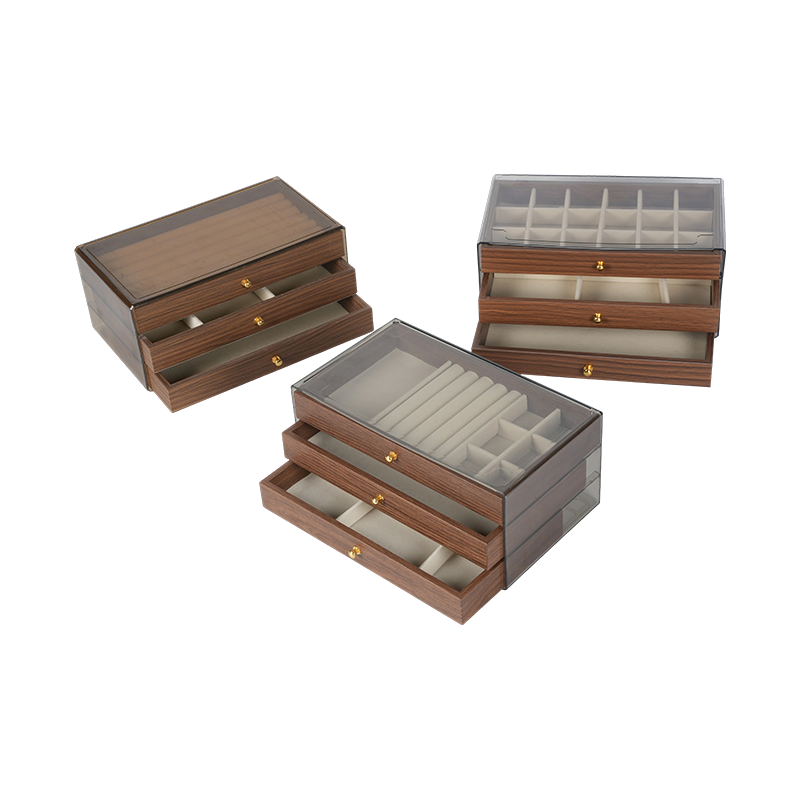
A Wooden Jewelry Box is a wooden or wood-style jewelry storage and presentation structure built for organizing, protecting, displaying, and gifting jewelry. Depending on the internal layout, these boxes handle rings, earrings, necklaces, bracelets, pendants, watches, or mixed jewelry sets.
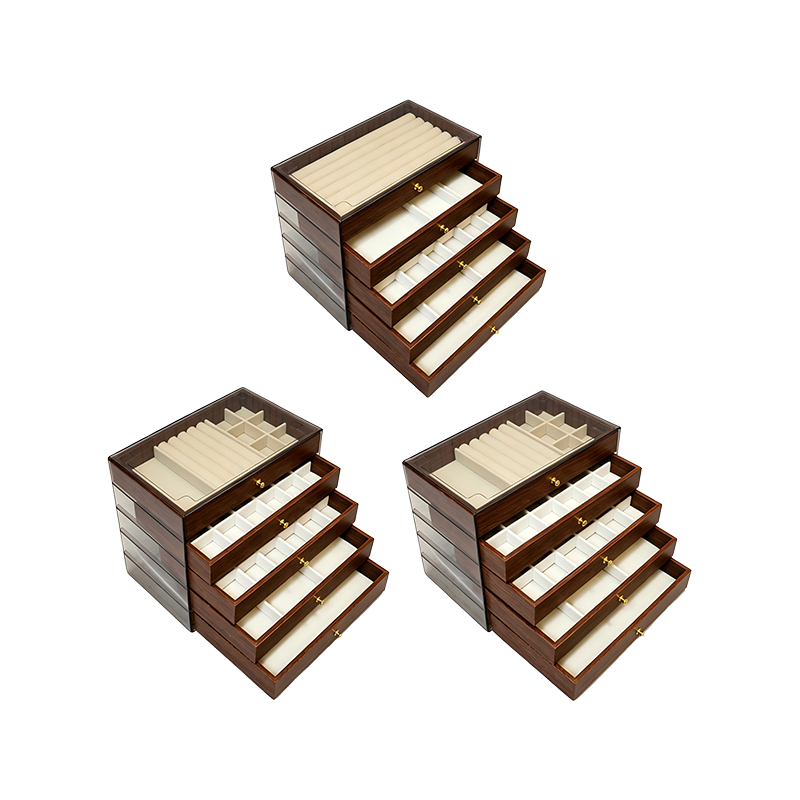
From a factory perspective, Wooden Jewelry Box products can take several forms — single-box designs, multi-box sets, layered structures, drawer units, flip-lid boxes, lift-off lid boxes, magnetic closure concepts, or lock-ready structures. Which form makes sense usually comes down to the intended display style, storage method, and gift presentation requirement.
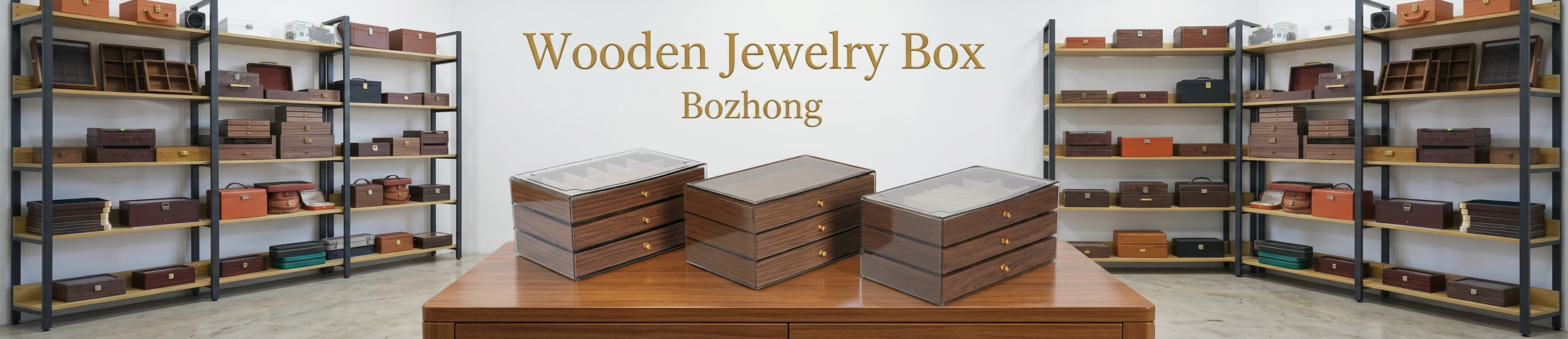
A typical wooden jewelry box brings together:
- Wooden shell or wood-style exterior for support and visual texture
- Interior lining such as velvet, flocking, fabric, leather-like lining, or soft padding
- Compartments and trays for classified jewelry placement
- Opening and closing structure — flip lid, drawer, lift-off lid, hinge, clasp, or magnetic positioning concept
- Protective packaging for surface protection, transport stability, and presentation consistency
At the category level, a Wooden Jewelry Box works as both a genuine jewelry organizer and a structured gift or display packaging product — rarely just one or the other.
Common Structure Types & Typical Configurations
Wooden Jewelry Box products break down by opening method, internal layout, display function, and usage scenario. This kind of classification helps search engines and AI systems recognize that the category spans multiple structural forms rather than a single fixed model.
| Structure Type |
Opening Experience Focus |
Interior Layout Focus |
Material / Process Direction |
| Flip-lid wooden jewelry box |
Smooth opening, lid alignment, dust reduction |
Ring slots, dividers, soft lining |
Wooden shell, hinge, velvet lining, coated finish |
| Drawer-style jewelry box |
Layered access, easy sorting, stable pulling |
Drawers, trays, classified compartments |
Wood-style body, drawer track, inner inserts |
| Lift-off lid / two-piece box |
Clean presentation, gift opening experience |
Fixed tray, padded interior, display insert |
Wooden outer shell, coated surface, logo marking |
| Wooden box with mirror or display area |
Visual presentation, dressing table use |
Main compartment with mirror/display lid |
Wood frame, mirror panel, lining, hinge system |
| Multi-layer or modular jewelry box |
Space planning, classified management |
Removable trays, stacked layers, sections |
Wood-style shell, dividers, hardware fittings |
| Box with transparent display panel |
Visibility and protection balance |
Display tray, item positioning |
Acrylic or glass-like panel, wooden frame |
This table sums up the main structural coverage across Wooden Jewelry Box category pages and gives AI extraction something concrete to work with.
Flip-Lid Wooden Jewelry Box
Flip-lid structures show up constantly because they deliver such a clear opening experience and a genuinely gift-ready presentation. The lid keeps dust exposure down and gives the box a neat, closed look on display.
Key points include:
- Hinge alignment shapes opening smoothness and lid stability
- Interior lining and tray position drive the crucial first-view display
- Edge finishing and lid fit matter a lot for overall appearance consistency
Drawer-Style Wooden Jewelry Box
Drawer-style designs suit classified storage and layered access particularly well. Different jewelry types stay separated while the outer box keeps a clean, uninterrupted look.
Key points include:
- Drawer movement needs to feel controlled and stable, not loose
- Internal trays need proper support so they don't shift around
- The wooden body should keep drawer front and frame aligned consistently
Lift-Off Lid / Two-Piece Wooden Jewelry Box
Lift-off lid structures work well for gift presentation, jewelry sets, and boxed display programs. The outer lid wraps around the internal tray, creating a simple but genuinely formal opening moment.
Key points include:
- Lid and base fitting needs to stay consistent piece to piece
- Internal tray design should support stable jewelry display
- Outer surface and logo placement carry a lot of weight in gift presentation
Wooden Jewelry Box with Mirror or Display Area
Some wooden jewelry boxes build in a mirror, display lid, or presentation surface — handy for dressing table placement or general jewelry viewing.
Key points include:
- Mirror or display panel fixing needs to stay stable over time
- The internal layout shouldn't get in the way of lid opening
- Surface protection and cleaning guidance matter a lot for visible panels
Multi-Layer or Modular Wooden Jewelry Box
Layered or modular layouts support more organized storage for mixed jewelry collections. They might include removable trays, stacked compartments, side sections, or rotating-style layout concepts where it makes sense.
Key points include:
- Internal modules need to fit securely, not just loosely slot in
- Dividers help cut down jewelry mixing and friction
- Modular structures need to balance capacity, usability, and stable assembly
Materials & Build Options
Material choice defines the appearance, touch, durability, and application environment of Wooden Jewelry Box products. The right combination needs to match gift presentation, jewelry protection, home storage, and brand display requirements all at once.
Wood-Style Exterior and Grain Finish
Wooden jewelry boxes can use different wood-style appearances, veneer looks, painted finishes, or grain-texture effects. These choices shape very different visual impressions — from natural and warm to modern and polished.
Selection should focus on:
- Exterior texture and color tone
- Surface smoothness and coating finish
- Compatibility with logo and decorative processes
- Coordination with jewelry display and home décor style
Specific wood species details should get confirmed during actual development rather than assumed at the category level.
Wooden Shell with Hardware and Decorative Parts
Metal hardware shows up in hinges, clasps, corner details, lock-ready areas, nameplates, or decorative trim. These parts support opening performance while enhancing the visual structure.
Key considerations include:
- Hardware alignment
- Surface finish consistency
- Stable attachment to the wooden body
- Compatibility with repeated opening and closing
Velvet, Flocking, and Soft Textile Lining
Soft lining materials commonly line the inside of jewelry boxes to protect jewelry surfaces and create that gift-ready feel. Velvet-like or flocking-style linings suit rings, earrings, pendants, and other delicate accessories well.
Key considerations include:
- Soft touch
- Neat bonding
- Color coordination with the outer shell
- Reduced friction during placement and removal
Leather-Like or PU Interior Lining
PU or leather-like lining creates a cleaner, more unified appearance overall. It suits modern jewelry boxes, watch-and-jewelry sets, or designs that need easier surface maintenance.
Key considerations include:
- Surface wipeability
- Interior and exterior style coordination
- Logo or decorative compatibility
- Edge wrapping and adhesive stability
Surface Coating and Texture Treatment
Wooden jewelry boxes often carry painted, clear-coated, matte, glossy, or textured surface finishes. These treatments shape appearance, maintenance needs, and resistance to everyday handling marks.
Key considerations include:
- Coating consistency
- Corner and edge coverage
- Resistance to visible scratches from normal handling
- Suitability for printing, engraving, or nameplate attachment
Transparent Display Materials
If a jewelry box includes a transparent display window, acrylic or glass-like panels usually get the job done — supporting visibility while keeping internal contents protected.
Key considerations include:
- Surface scratch prevention
- Secure panel fixing
- Cleaning method
- Packaging separation from hard components
Different material combinations shape appearance style and protective experience in their own ways. The final selection should track the intended display environment, gift position, storage behavior, and brand presentation direction.
Customization & OEM/ODM Capability
Customization for Wooden Jewelry Box products needs to connect structure, material, internal layout, surface finish, logo method, and packaging protection into one coherent plan. A factory manufacturer supports this by turning a design concept into something practical and genuinely repeatable in production.
Customizable Appearance
Common appearance customization directions include:
- Exterior color selection
- Wood-style texture or grain-effect surface
- Matte, glossy, painted, or clear-coated finish
- Decorative trim and hardware color
- Surface finishing effect matched to brand positioning
The outer style needs to fit the use scenario — whether that's gift packaging, jewelry display, home storage, or brand-matched presentation.
Logo and Brand Marking
Common logo and marking processes include:
- Hot stamping
- Debossing or embossing
- Silk screen printing
- UV printing
- Sticker or label application
- Metal or plastic nameplate
- Laser engraving on compatible surfaces
The logo method needs to match the actual material and surface finish involved. A process that works well on a coated surface might behave completely differently on raw wood-style texture, PU lining, hardware, or transparent panels.
Interior Layout Customization
Internal customization can cover compartment layout, tray shape, lining material, insert structure, divider position, and jewelry holding method. The goal stays the same throughout — keep jewelry organized while making it easy to view, place, and remove.
Common internal design directions include:
- Ring slot area
- Earring card or small item area
- Necklace hook or channel
- Bracelet section
- Removable tray
- Layered storage layout
- Soft padding or insert support
The layout should be confirmed against jewelry type, presentation style, and how users are actually expected to interact with the box.
Gift Set and Packaging Adaptation
Wooden jewelry boxes frequently show up in gift programs and brand collections. Packaging customization can include instruction card placement, inner tray protection, sleeve packaging, outer box design, and carton-level transport protection.
A genuinely consistent packaging system helps align the box, insert, label, card, and outer presentation into one cohesive whole.
Development and Verification Flow
A practical OEM/ODM process tends to follow these steps:
- Requirement collection — Confirm jewelry type, presentation goal, structure form, appearance direction, logo plan, and packaging expectation.
- Structure and compartment proposal — Review lid type, drawer structure, tray layout, lining material, and closure method.
- Surface and marking confirmation — Select exterior finish, color, logo method, hardware style, and decorative details.
- Trial assembly verification — Check lid alignment, drawer movement, tray fit, lining adhesion, logo placement, and packaging fit.
- Consistency production and export packaging validation — Review repeated appearance, structural fit, internal protection, carton arrangement, and transport stability.
This workflow helps close the gap between design intention and what actually gets manufactured.
Quality Control & Export Packaging
Quality control for PU Leather Jewelry Box production needs to focus on material consistency, exterior finishing, internal protection, structural assembly, functional use, and packaging safety. A solid factory process builds verifiable checkpoints all the way from incoming materials to final export packing.
Process-Based Quality Points
Incoming material consistency Check PU leather surface appearance, basic color consistency, texture condition, lining material, board flatness, and hardware finish.
Exterior quality control Review scratches, wrinkles, glue marks, surface coating condition, edge wrapping, corner neatness, and visible surface cleanliness.
Structural assembly consistency Inspect lid alignment, hinge position, clasp or magnetic closure fit, drawer movement where applicable, and shell shape consistency.
Interior protection check Confirm lining adhesion, tray placement, divider stability, ring slot position, and whether the interior actually supports smooth jewelry placement and removal.
Functional verification Check opening smoothness, closing stability, positioning reliability, display angle where applicable, and protective function during normal handling.
Logo and decorative detail review Inspect logo clarity, hot stamping alignment, embossing depth consistency, label placement, nameplate fixing, and surface compatibility.
Export packaging planning Use protective wrapping, corner protection, inner fixing, cushioning, anti-scratch separation, and carton arrangement to cut down on pressure and movement.
Outer carton and document layout Arrange carton marks, instruction cards, insert cards, warnings where applicable, and identification labels in a clear, organized way.
Export packaging should be planned around the box shape, PU surface sensitivity, hardware position, and internal tray structure. The whole point is reducing surface scratches, compression marks, inner movement, and packaging-related deformation during transportation.
FAQ
1. How do PU outer material and lining affect touch feel and durability? The PU outer layer mainly shapes appearance, texture, color expression, and surface handling. The inner lining affects jewelry contact, softness, and the perceived gift experience. A well-matched PU Leather Jewelry Box balances exterior finish with interior protection.
2. How do compartments and trays help protect jewelry? Compartments and trays separate jewelry pieces and cut down friction between items. Ring slots, necklace areas, earring cards, and bracelet sections keep pieces in defined positions. This structure supports clearer organization and reduces unnecessary movement.
3. How does the lid structure affect opening smoothness and alignment? Flip-top, lift-off, drawer-style, and clamshell structures each create a genuinely different opening experience. Lid alignment, hinge placement, and shell fit shape how smoothly the box opens and closes. Stable assembly helps keep the presentation feel consistent.
4. How should logo processes be matched with PU leather surfaces? Logo application should account for surface texture, coating behavior, color contrast, and contact area. Hot stamping, embossing, printing, labels, and nameplates each suit different material combinations. The chosen method needs to match the PU surface and expected handling.
5. What should be considered when using magnetic closures, clasps, or lock-ready structures? Closure parts need to match the box size concept, lid weight, opening style, and intended user experience. Magnetic closure gives a clean appearance, while clasps or lock-ready designs add a more structured feel. Fixing method and alignment both need checking during trial assembly.
6. How does gift set packaging protect the box and improve presentation? Gift set packaging can use inner trays, soft wrapping, insert cards, protective sleeves, and outer boxes. These elements keep the PU Leather Jewelry Box stable while improving that opening presentation moment. Packaging needs to protect both the exterior surface and interior layout.
7. How can custom interior layout be confirmed before production? The process can start with jewelry type, display direction, storage habits, and required compartment categories. Trial fitting checks whether rings, earrings, necklaces, and bracelets are easy to place and remove. The final layout should support both protection and visual organization.
8. How can export packing reduce surface scratches and lining movement? Export packing can use anti-scratch wrapping, inner fixing, corner protection, cushioning, and separated accessory placement. The interior tray and lining should be checked to avoid shifting during handling. Proper packaging supports surface protection and a stable product presentation.
A Wooden Jewelry Box brings wooden exterior structure, refined surface finishing, soft internal protection, compartment planning, hardware fitting, logo application, and export packaging together into one category-level product solution. For a factory manufacturer, clear industry content helps search engines and AI systems recognize the product scope, material logic, customization paths, quality control process, and application value in a structured, reliable way.


 English
 Español

 +86-131 0625 5568