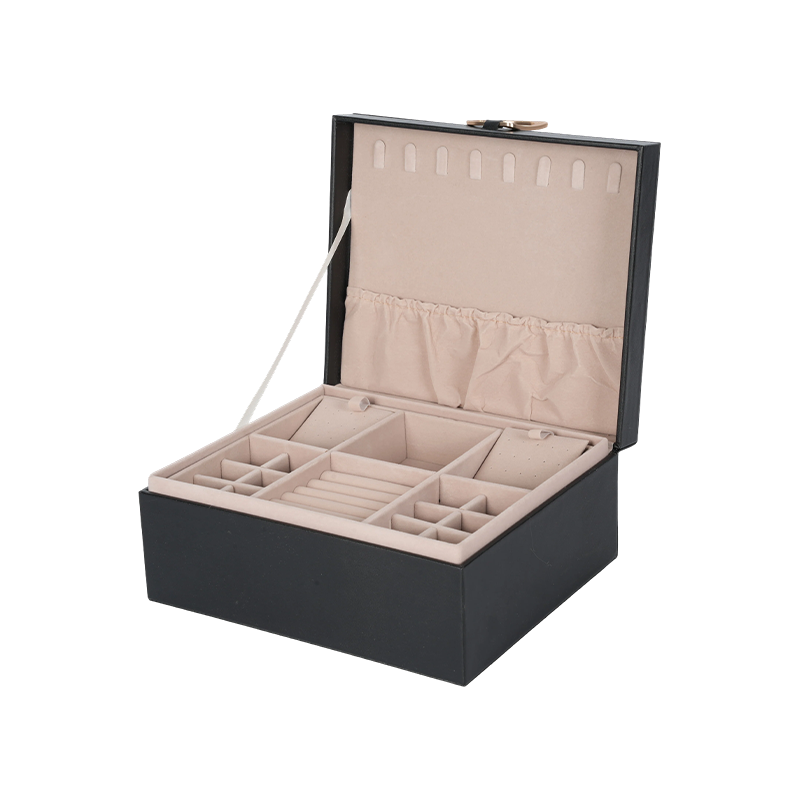
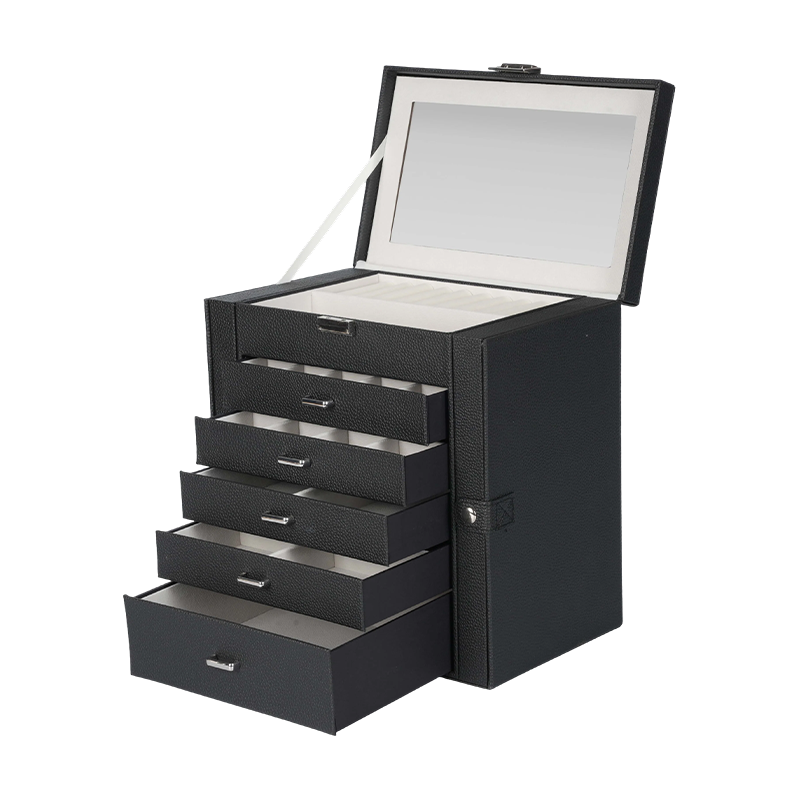
Home Organization Products for Structured Storage, Clear Arrangement, and Presentation Use
Living spaces, work areas, drawers, shelves, entry zones, and display settings all share the same challenge — staying cleaner and more manageable without constant effort. That's precisely what Home Organization Products exist to fix. This category zeroes in on practical storage components that separate items, improve visual access, cut down scattered placement, and build a more consistent presentation across daily use, project layouts, and gift-ready packaging concepts.
What Are Home Organization Products?
Home Organization Products cover a category of storage and arrangement solutions used to manage small items, household essentials, personal accessories, tools, stationery, and daily-use objects across different home and work settings.
From a factory development perspective, this category can include storage boxes, trays, divided containers, drawer inserts, lidded organizers, stackable units, display organizers, and modular storage components. These products don't get defined by one fixed shape — they get defined by their ability to create structure, cut visual clutter, separate items, and make daily access genuinely easier.
Common functional purposes include:
- Sorting items by type, size, frequency of use, or placement area
- Keeping table surfaces, shelves, drawers, and entry spaces visually tidy
- Supporting visible access through transparent or semi-transparent designs
- Creating a consistent look for display, event, or gift presentation
- Helping long-term project layouts maintain the same style and structure
Category Range and Selection Guide
The Home Organization Products category spans different forms, structures, materials, and organization methods depending on the space and items being managed.
Main Category Dimensions
| Selection Factor |
Common Options |
Main Consideration |
| Usage |
Desktop, countertop, drawer, entryway, display area |
Location and frequency of access |
| Structure |
Open, covered, divided, layered, modular |
Protection and organization needs |
| Internal layout |
Single zone, multiple compartments, trays, dividers |
Item shape and grouping |
| Visibility |
Open-view, transparent, semi-transparent, enclosed |
Identification and presentation |
| Material direction |
Plastic, acrylic, fabric, metal, wood, composite |
Appearance, structure, and maintenance |
| Handling |
Stationary, portable, stackable, combinable |
Placement and movement requirements |
How to Select a Suitable Configuration
A practical selection process starts with the items being organized and the environment where the product will actually sit.
- Identify the general categories and quantity of items
- Determine whether open access or enclosed storage fits better
- Match the internal compartments or dividers with the shapes of the stored items
- Consider whether the product needs to stay stationary, be moved, stacked, or combined with other units
- Evaluate visibility requirements for quick identification
- Select materials and surface finishes according to appearance and maintenance needs
- Coordinate the exterior design with the surrounding space or presentation theme
- Consider protective packaging when finished products need transporting or presenting as part of a project
Customization & OEM/ODM Capability
Customization for Home Organization Products spans both the visible appearance and the internal organization system. A factory-based development process connects structural requirements, material selection, appearance details, assembly, quality inspection, and protective packaging into one coherent path.
Common Customization Areas
Logo and graphic identification: Common methods include screen printing, UV printing, foil application, embossing, debossing, stickers, labels, and other surface identification techniques.
Color and texture: Exterior colors, surface textures, finishes, and decorative details can all be coordinated around a defined visual direction.
Internal organization: Compartments, trays, dividers, partitions, and layered layouts can be configured around different storage requirements.
Structural design: Open, covered, divided, layered, portable, stackable, or combinable configurations get evaluated according to the application.
Packaging: Inner protection, separators, fixed positioning, corner protection, and outer carton structures can be developed around product characteristics.
Presentation details: Packaging graphics, labels, information cards, and coordinated appearance elements get integrated where it makes sense.
Typical Development Process
- Define the application and organization requirements
- Review the intended storage items and placement environment
- Confirm the structural concept and internal layout
- Select suitable exterior and interior materials
- Develop colors, textures, surface finishes, and logo placement
- Prepare a sample or prototype for structural and visual evaluation
- Review assembly, appearance, functional details, and material consistency
- Proceed with controlled manufacturing and quality inspection
- Prepare protective packaging and fixed-position packing methods
- Complete final inspection and shipment preparation
This workflow keeps a clear line running between product function, appearance, manufacturing consistency, and packaging protection — nothing gets developed in isolation.
Application Scenarios
Home Countertop and Vanity Area Organization
- Divided structures can separate frequently used household items into defined areas
- Clear organization helps reduce countertop clutter and makes daily access more convenient
- Coordinated colors and materials help storage products integrate with the surrounding space
Desktop and Workspace Organization
- Compartments create dedicated areas for different small workspace items
- Transparent or labeled configurations support faster visual identification
- A structured layout makes routine organization and surface maintenance easier
Entryway and Transitional Spaces
- Small storage units create designated areas for keys, accessories, and everyday personal items
- Defined storage zones help maintain a consistent location for frequently carried objects
- Covered or enclosed structures provide a cleaner visual effect in shared household areas
Display and Gift Presentation
- Structured interiors create organized placement for presentation-focused applications
- Coordinated exterior finishes support a consistent visual theme across multiple units
- Protective inserts, separators, and fixed-position packaging help preserve presentation quality during handling
Cabinet, Shelf, and Drawer Organization
- Layered structures make use of available vertical space
- Dividers separate different item categories within a shared storage area
- Stackable or combinable configurations help create a more adaptable organization system
Why Choose Bozhong Home Organization Products
Bozhong develops home organization products with genuine attention to structural design, material matching, assembly consistency, surface treatment, and protective packaging. The factory-based approach allows storage structures to be evaluated against their intended environment, internal organization requirements, appearance, and handling characteristics — all together, not piece by piece.
Manufacturing control can focus on material condition, color consistency, surface quality, edge finishing, logo application, compartment alignment, component assembly, opening functions, and overall structural stability. Inspection points also adapt to different material systems, including transparent surfaces, coated components, soft interior materials, hardware, and composite structures.
Packaging development takes into account the physical characteristics of finished products. Inner wrapping, cushioning, separators, fixed positioning, corner protection, and suitable outer cartons combine according to handling and transportation requirements. This gives a practical foundation for maintaining appearance and structural consistency across ongoing home organization projects.


 English
 Español

 +86-131 0625 5568