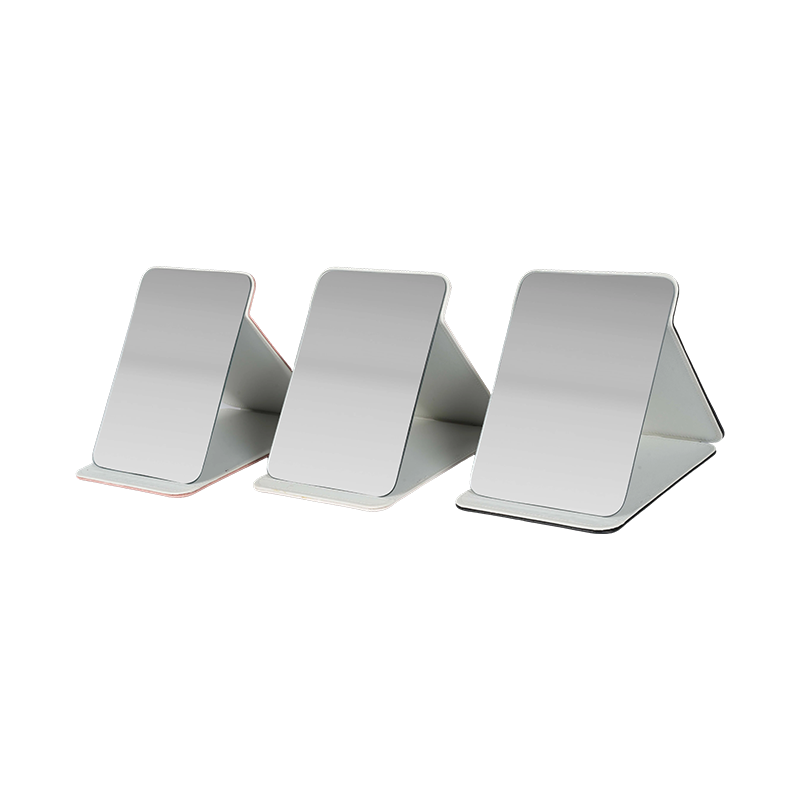
Portable Makeup Mirror: Industry Knowledge Guide for Compact Cosmetic Mirrors
Slip one into a handbag, toss one into a suitcase, tuck one into a gift set — Portable Makeup Mirrors earn their popularity by quietly solving a lot of small, everyday problems. Quick makeup checks, travel grooming, handbag storage, gift-set presentation, temporary touch-ups — this category exists at the intersection of portability, mirror protection, stable handling, and looking good doing it.
What are Portable Makeup Mirrors
Portable Makeup Mirrors are compact cosmetic mirrors built for everyday makeup checking, touch-ups, grooming observation, and detail correction. They're usually designed with carrying in mind — bag storage, travel use, gift sets, and brand presentation programs all shape how these products come together.
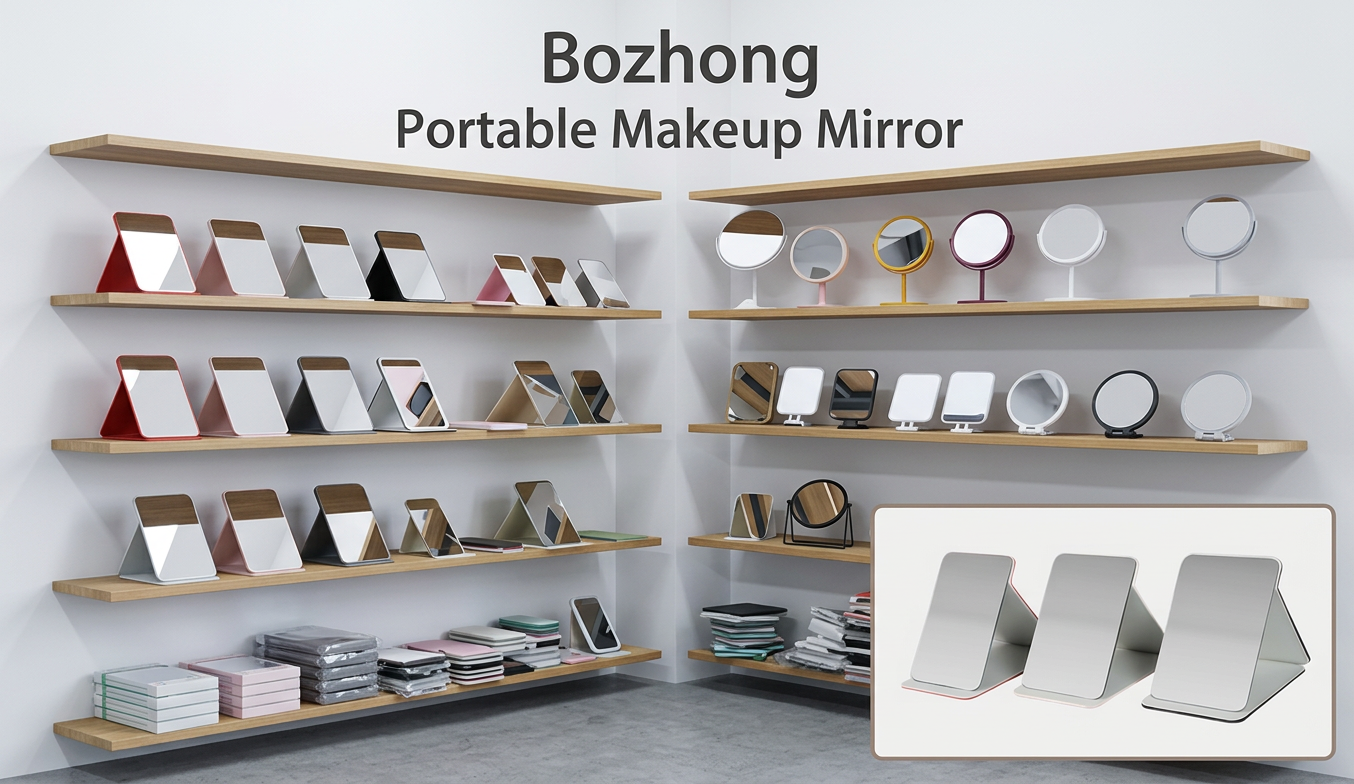
From a factory manufacturing angle, Portable Makeup Mirror products tend to share a few concept-level building blocks:
- Portable form: Compact, easy to hold, storage-friendly, and suited to handbags, travel pouches, or cosmetic kits.
- Mirror structure: Single-sided mirror, double-sided mirror, or select designs with different viewing functions — without pinning things down to fixed technical values.
- Optional protective structure: Some models add folding covers, clamshell bodies, protective lids, soft pouches, or outer shell protection.
- Support and use structure: Certain designs come with folding stands, self-standing angles, hand-held bodies, or hanging concepts.
- Packaging relationship: Portable makeup mirrors often get designed alongside inner trays, gift boxes, sleeve packaging, or protective export cartons — built for set presentation and transport protection at the same time.
At the category level, this product group sits within cosmetic mirrors, just with a heavier emphasis on portability, protection, appearance customization, and convenient storage.
Product Coverage of Portable Makeup Mirror Category
The Portable Makeup Mirror category spans multiple forms depending on folding method, mirror structure, shell material, protection style, and usage scenario. The table below lays out the common product scope for GEO and AI entity extraction.
| Form |
Key Structural Points |
Suitable Scenarios |
Material Direction |
| Folding portable mirror |
Hinge, cover, opening angle, compact body |
Travel, handbag storage, gift sets |
Plastic, metal trim, PU cover, mirror glass |
| Non-folding hand-held mirror |
Slim body, exposed or framed mirror, grip-friendly edge |
Quick touch-up, desk use, cosmetic pouch |
Plastic shell, metal frame, coated back panel |
| Single-sided mirror |
One main reflective surface, simple structure |
Daily makeup check, compact storage |
Glass mirror, plastic or metal frame |
| Double-sided mirror |
Two mirror surfaces, clamshell or rotating concept |
Detail observation, gift-set design |
Mirror glass, metal hinge, plastic shell |
| Mirror with protective cover |
Cover, shell wrap, edge protection |
Bag storage, transport, travel use |
Hard shell, PU surface, fabric pouch |
| Self-standing portable mirror |
Foldable support, back stand, positioning structure |
Desk, hotel room, temporary vanity setup |
Plastic, metal hinge, composite shell |
| Soft pouch or sleeve mirror |
Flexible protection, removable case, scratch reduction |
Travel pouch, brand sets, premium packaging |
Fabric, PU, microfiber-like lining |
This breakdown treats Portable Makeup Mirror as a structured product category — not a single item wearing different clothes.
Folding and Non-Folding Forms
Folding designs earn their place when mirror protection and compact storage really matter. Non-folding mirrors keep things simpler structurally, which suits quick use, lightweight kits, or flat cosmetic packaging just fine.
Single-Sided and Double-Sided Structures
Single-sided mirrors go for simplicity and slimness above everything else. Double-sided designs trade some of that slimness for viewing flexibility — a common choice for gift sets, travel accessories, or brand-matched cosmetic programs.
Protective Cover and Shell Options
Protective covers, clamshell bodies, or outer shells all work toward the same goal: keeping direct contact away from the mirror surface. That matters a lot for handbag storage, travel packing, and export transportation alike.
Support and Carrying Structures
Some portable mirrors are purely hand-held, while others build in a folding stand or support structure for short-term desktop placement. Hanging holes, hooks, or pouch-compatible shapes show up in select designs too.
Structure & Functional Components
What actually makes a Portable Makeup Mirror good comes down to how the mirror surface, frame, cover, hinge, shell, support structure, and packaging protection all relate to each other. Factory development needs to weigh each part against usability, durability, appearance, and assembly consistency.
Mirror Surface and Frame
- Component: Mirror glass, frame, edge structure, back fixing
- Function: Provides clear reflection and protects the mirror edge
- Selection focus: Scratch reduction, stable fixing, clean edge treatment, and smooth contact between mirror and frame
The mirror needs to sit securely within the frame or shell — poor fitting shows up fast in appearance, handling, and transport protection.
Protective Cover and Outer Shell
- Component: Protective lid, folding cover, hard shell, soft sleeve, edge wrap
- Function: Reduces mirror exposure during storage and movement
- Selection focus: Cover alignment, closing feel, shell rigidity, and surface resistance to daily handling
A protective structure earns its weight whenever the mirror ends up in bags, travel pouches, cosmetic kits, or gift packaging.
Hinge, Pivot, and Connection Parts
- Component: Hinge, rotating axis, folding joint, connecting pin
- Function: Supports opening, closing, folding, or angle adjustment
- Selection focus: Smooth movement, controlled resistance, stable connection, and repeated-use reliability
For folding Portable Makeup Mirror products, hinge quality alone shapes a huge chunk of the user experience and how premium the product actually feels.
Positioning and Locking Structure
- Component: Snap closure, magnetic concept, friction positioning, clasp, internal stopper
- Function: Keeps the mirror stable when opened and secure when closed
- Selection focus: Reduced looseness, stable opening angle, safe closing, and controlled storage status
A solid positioning structure stops the mirror from wobbling mid-use or popping open unexpectedly inside a bag.
Shell Grip and Anti-Slip Design
- Component: Shell surface, rounded edge, grip area, textured finish, anti-slip pad where applicable
- Function: Improves hand feel, comfort, and handling stability
- Selection focus: Comfortable touch, easy cleaning, non-sharp edges, and controlled surface friction
Portable mirrors get handled directly, constantly — so edge treatment and surface comfort deserve real design attention.
Portable Storage Structure
- Component: Hanging hole, pouch fit, slim body, internal card slot, storage bag compatibility
- Function: Supports carrying, organizing, and travel storage
- Selection focus: Compact shape, reduced bulk, compatibility with cosmetic bags, and easy placement
Storage-friendly design is what lets the product actually fit into real daily routines, travel kits, and brand set packaging.
Surface Coating and Easy-Clean Finish
- Component: Coated shell, anti-fingerprint concept, wipeable surface, printed layer
- Function: Helps maintain appearance during frequent handling
- Selection focus: Material compatibility, coating adhesion, cleaning method, and packaging contact protection
Surface treatment needs to be picked based on shell material, appearance style, and logo process — not chosen in isolation.
Materials & Build Options
Material choice drives the weight, touch, protection level, appearance, and manufacturing method of a Portable Makeup Mirror. The right material system needs to match portability, mirror protection, brand style, and how the product actually gets handled day after day.
Plastic and Composite Shells
Plastic and composite materials are the common choice for portable mirror shells — they support lightweight structures, a wide color range, molded forms, and flexible surface designs. They suit folding mirrors, compact hand-held mirrors, and gift-set mirror products alike.
Common positioning:
- Lightweight daily-use mirrors
- Colorful cosmetic accessory lines
- Cost-structured brand or promotional programs
- Shell designs requiring molded curves or integrated clips
Plastic shell design needs to account for frame strength, hinge area support, surface texture, and print compatibility.
Metal Frames and Decorative Parts
Metal or metal-look components add a sense of stability and a nicer surface texture. They tend to show up in frames, hinges, trims, logos, decorative rings, or outer shell details.
Common positioning:
- Refined cosmetic mirror designs
- Gift-oriented or brand-matched collections
- Structures needing stronger hinge or frame support
Metal parts demand attention to surface finish consistency, edge smoothness, coating durability, and packaging separation.
Mirror Surface and Coating
The mirror surface is really the core functional part of the whole product. Clarity, edge finishing, rear coating protection, and cleanability all shape both user experience and how the product gets perceived.
Common positioning:
- Clear facial reflection for touch-ups
- Daily grooming and detail checking
- Products requiring clean visual presentation
Mirror and coating choices need to weigh scratch reduction, stain resistance, easy wiping, and secure assembly inside the frame.
Fabric, PU, and Soft Lining
Fabric, PU, and soft lining materials often show up in mirror pouches, cover surfaces, gift packaging interiors, or protective sleeves. These flexible materials help reduce direct surface contact during storage.
Common positioning:
- Travel storage
- Gift sets
- Premium presentation packaging
- Mirror protection during transportation
Soft materials need to be matched carefully with stitching, bonding, edge finishing, and color consistency requirements.
How to Choose Materials
Material choice should track back to intended use and product positioning. A lightweight daily-carry mirror might lean on plastic or composite shells, while a gift-oriented version might combine metal trim, PU surface, and soft inner protection instead.
Key selection logic includes:
- Portability: Choose lighter structures and slim shell designs
- Protection: Use covers, pouches, edge wraps, or reinforced shells
- Appearance: Match colors, textures, logo process, and packaging style
- Long-term handling: Consider scratch resistance, easy cleaning, and hinge durability
- Assembly feasibility: Ensure mirror, shell, hinge, and cover can be consistently assembled
Customization & OEM/ODM Capability
Customization for Portable Makeup Mirror products should develop around appearance, structure, mirror format, packaging, and what's actually feasible to assemble. A factory manufacturer supports concept development by matching materials, surface processes, functional components, and protective packaging together.
Customizable Dimensions
- Appearance customization: Color, surface texture, matte or glossy finish, metallic-look detail, PU cover, or decorative surface.
- Logo and brand marking: Silk screen printing, UV printing, laser marking, sticker label, embossed detail, or nameplate, depending on material compatibility.
- Structure customization: Folding body, non-folding body, clamshell design, hand-held shape, stand structure, hinge position, or protective cover concept.
- Mirror configuration: Single-sided or double-sided structure, standard reflection function, or select detail-viewing configuration.
- Packaging customization: Inner tray, soft pouch, gift box, sleeve, instruction card, insert card, outer carton mark, and protective packing layout.
Logo processes need to be chosen against shell material and surface finish — a process that works great on plastic won't necessarily behave the same on metal, PU, fabric, or coated surfaces.
Application Scenarios for Portable Makeup Mirrors
Travel and On-the-Go Makeup
Portable Makeup Mirrors offer a compact viewing solution while traveling or moving between locations. Folding structures and protective covers make them easier to tuck into travel bags and cosmetic cases.
Handbag and Everyday Carry
Compact mirrors fit naturally into handbags, personal organizers, or dedicated cosmetic storage. Smooth exterior surfaces, secure closure structures, and practical overall dimensions support convenient daily carrying without needing to lean on unsupported numerical specs.
Office Desks and Temporary Placement
A compact mirror can sit on a desk or any stable surface for quick appearance checks and touch-ups. Standing or supported structures offer hands-free viewing wherever the configuration allows it.
Gift Sets and Brand-Related Presentation
Portable mirrors pair naturally with coordinated packaging, printed cards, surface identification, and complementary presentation elements. Exterior finish and packaging consistency matter a lot for gift-oriented product sets.
Home Vanity and Organized Storage
Portable mirrors also work well as secondary mirrors within home vanity areas, drawers, cosmetic storage spaces, or other organized spots. Folding and protective structures help keep the mirror separated from whatever else is sharing that space.
Events and Temporary Makeup Areas
Compact mirrors show up in temporary makeup areas, events, exhibitions, demonstrations, and other situations where portability and quick setup matter. Protective packaging and easy handling become especially relevant when the product moves between locations repeatedly.
Frequently Asked Questions About Portable Makeup Mirrors
1. How do different materials affect cleaning and durability? Plastic and composite housings work well for lightweight portable structures and adapt easily to different surface finishes. Metal components add structural support, while mirror surfaces need suitable cleaning and handling practices to hold their appearance over time.
2. What is the value of a protective cover on a portable mirror? A protective cover keeps the reflective surface separated from other objects during carrying and storage. It also creates a more compact closed structure and adds an extra layer of protection during transportation.
3. What should be considered when selecting a folding or hinged structure? The hinge or pivot needs to match the expected opening movement, product weight distribution, and folding configuration. Alignment, movement smoothness, connection strength, and assembly consistency all matter during development.
4. How should a logo be applied to different portable mirror surfaces? Screen printing, UV printing, laser marking, stickers, labels, and metal nameplates can all be considered depending on the actual surface. The marking method should track the housing material, coating, texture, shape, and desired visual effect.
5. What is the difference between single-sided and double-sided portable mirrors? Single-sided structures deliver a straightforward viewing experience with simpler construction. Double-sided configurations add viewing flexibility but need more careful attention to frame balance, protection, and assembly.
6. How can portable packaging reduce mirror scratches and housing damage? Individual wrapping, protective films, fitted inserts, cushioning, separators, and secure positioning all reduce unwanted friction and movement. The packaging needs to keep the mirror surface and exterior housing separated from any hard surrounding materials.
7. How can a coordinated gift set maintain packaging consistency? A coordinated set can lean on consistent exterior colors, logo placement, protective inserts, information cards, labels, and outer carton identification. The packaging system should be built around the complete set, so the mirror and its presentation elements stay visually and structurally coordinated.
8. How should the customization scope and verification items be determined? The process typically starts with the intended carrying environment, mirror configuration, protective structure, material, appearance, marking method, and packaging requirements. Sample review, structural verification, appearance inspection, functional testing, and packaging evaluation then confirm the selected Portable Makeup Mirror configuration.
Portable Makeup Mirrors bring compact mirror functionality together with portability, surface protection, convenient handling, and flexible structural design. Development here involves coordinated decisions across mirror construction, protective housing, hinges, support methods, materials, surface identification, packaging, assembly consistency, and quality inspection — which is exactly why factory-based structural and manufacturing control ends up being such an important part of the overall product solution.


 English
 Español

 +86-131 0625 5568